In a strategic move reflecting the growing importance of quick commerce, Zomato has recently committed $100 million to deepen its stake in Dunzo, an Indian startup known for its rapid delivery services. This significant investment not only reinforces the evolving dynamics of urban retail but also shines a light on how instant delivery platforms are becoming key drivers in organizing India’s fast-expanding retail ecosystem.
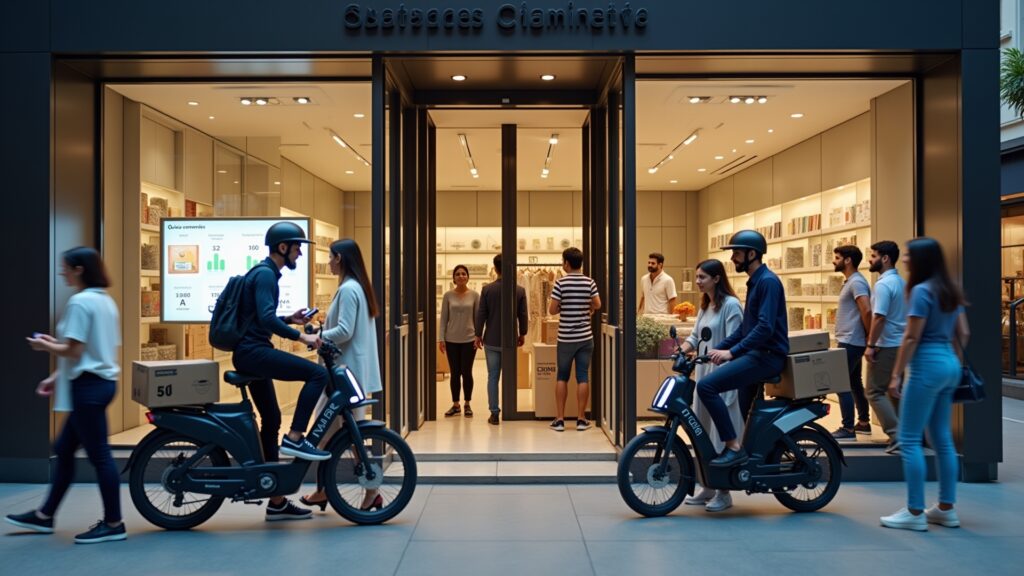
Originally focused on food delivery, Zomato’s expansion into quick commerce via Dunzo epitomizes a broader trend where retail and service platforms are converging to meet rising consumer expectations for speed and convenience. Quick commerce—the ultra-fast delivery of goods, especially groceries and essentials—has emerged as a critical category that challenges traditional retail fulfillment models by focusing on hyperlocal inventory management, last-mile delivery optimization, and data-driven merchandizing.
This partnership is a strong indicator of how digital platforms are investing in omnichannel capabilities that seamlessly integrate instant delivery with offline and online retail presence. For retail business owners and brand leaders, the tie-up highlights the increasing necessity to adapt store replenishment, inventory management, and assortment strategies to function within compressed delivery timelines. Consumers, particularly in metropolitan and high-density urban areas, are driving this shift toward immediacy, reshaping demand curves and requiring retailers to rethink their location and format strategies to maintain footfall while balancing margin pressures.
From a strategic viewpoint, Zomato’s investment into Dunzo signals a clear prioritization of quick commerce as a growth vertical, with implications for retail executives and investors evaluating future-proofed, scalable models. As quick commerce platforms scale operationally, the integration of AI and machine learning in inventory forecasting, customer personalization, and fulfillment efficiency becomes essential. This partnership also hints at heightened competition among aggregators and a consolidation phase in the Indian retail and delivery ecosystem.
Furthermore, this move supports the broader landscape of omnichannel retail, where blending digital and physical retail capabilities enhances customer experience consistency and boosts conversion rates. Retail real estate stakeholders and mall operators may increasingly see quick commerce as an opportunity to drive new leasing strategies for micro-fulfillment centers and pick-up points integrated into urban commercial zones.
In conclusion, Zomato’s $100 million investment in Dunzo is more than a financial transaction; it is a strategic repositioning that retail leaders, investors, and policymakers must track closely. Quick commerce is not just a convenience trend—it is restructuring supply chains, accelerating retail innovation, and redefining competitive positioning in India’s vibrant retail market. The challenge for retail businesses moving forward will be to harness these rapid delivery infrastructures to balance growth, profitability, and consumer satisfaction in a digitally-driven marketplace.